
Key Takeaways
- Event security encompasses protecting people, property, and reputation at gatherings ranging from festivals and corporate functions to sports fixtures across the UK
- Anubis Group provides SIA approved contractor services with highly trained event security teams for events from 100-person conferences to 50,000+ attendee festivals
- Effective event security starts months before the event with risk assessment and planning, continuing until de-rig completion
- Core pillars include crowd management, access control, emergency response, asset protection, and compliance with UK regulations
- The planning process involves consultation, risk assessment, security plan design, staff briefing, live operations, and post-event review
Introduction: Why Event Security Matters in 2026 UK
Event security has become a board-level priority for organisers following high-profile UK incidents like the Manchester Arena bombing in 2017 and the growing expectations of Martyn’s Law. With the Terrorism (Protection of Premises) Bill mandating proportionate security measures for venues based on size and threat levels, professional event security services are no longer optional—they’re essential.
The UK hosts millions of people attending events annually, from summer music festivals and Premier League fixtures to London corporate events and city-centre parades. Each brings distinct security risks requiring tailored solutions. Anubis Group is a UK-based specialist in professional event security, crowd management services, and risk-led planning for both public and private events.
This guide breaks down what event security is, core responsibilities of security personnel, how planning works, and how Anubis Group supports event organisers from first concept to post-event review.

What Is Event Security?
Event security is the combination of trained security personnel, structured procedures, and technology used to keep attendees, staff, performers, and assets safe before, during, and after an event. This encompasses everything from visible security officers managing crowd flows to discreet access control at corporate functions.
Concrete tasks include crowd control at entry points, access control and bag searches, ticket verification, conflict resolution, emergency response coordination, liaison with emergency services, and asset protection for stages, stock, and cash. Professional security services cover all event types: open-air festivals, indoor arenas, stadiums, corporate AGMs, trade shows, weddings, and community events.
In the UK, main event security means using SIA-licensed security operatives, event stewards, and specialist roles operating under a written security plan. Good venue security is visible enough to reassure guests but discreet enough not to dominate the enjoyable experience.
Core Roles and Responsibilities of Event Security Staff
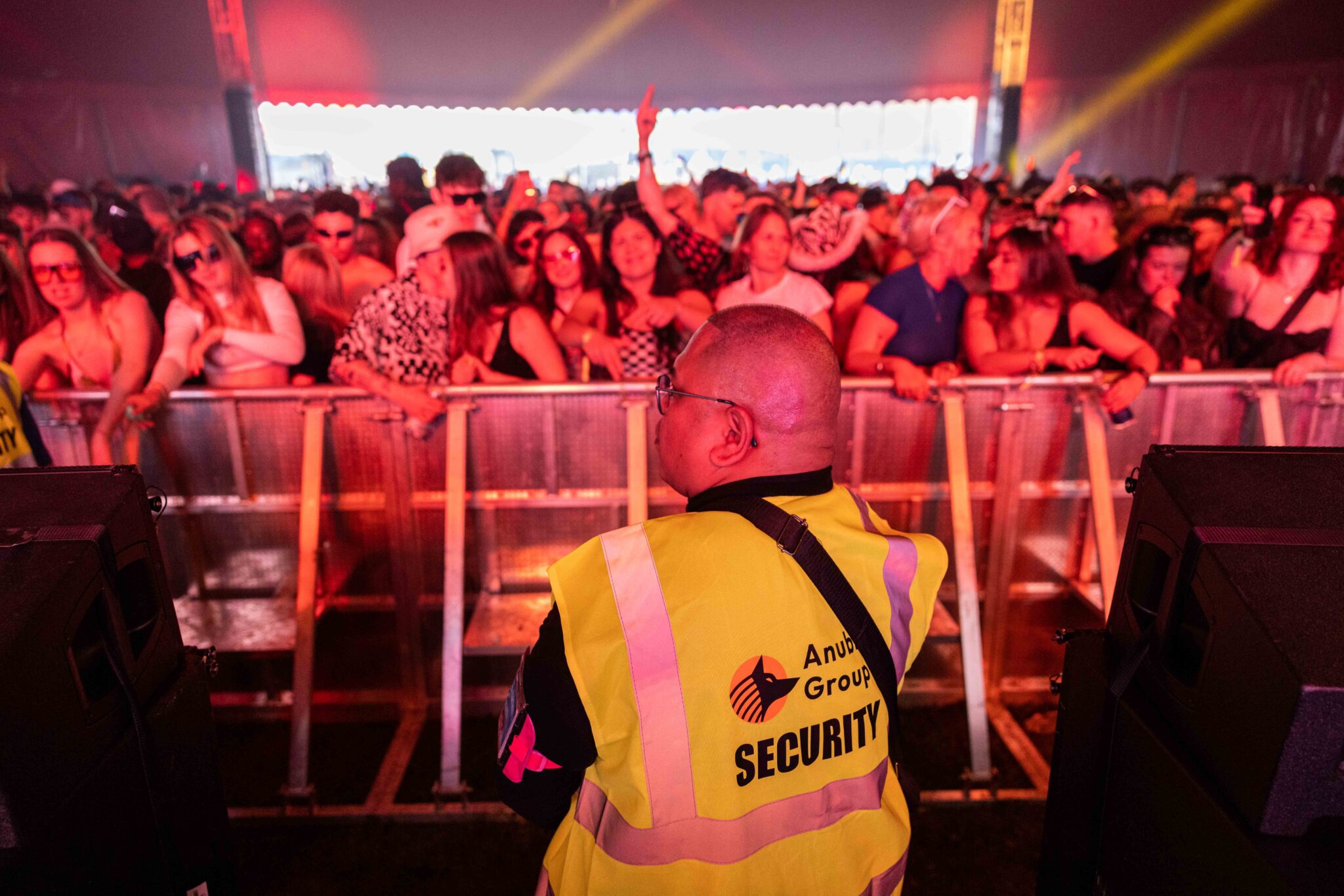
Event security is delivered by a structured security team comprising security guards, stewards, supervisors, and control room staff. Anubis Group structures teams with clear lines of command, including team leaders, supervisors, control room operators, and liaison officers for organisers and emergency services.
Key responsibilities span crowd management, access control and search procedures, customer service, incident detection and reporting, and emergency response. The approach differs significantly—managing queues at a 10,000-capacity concert requires different tactics than securing a 300-person awards dinner.
Crowd Management and Guest Safety
Crowd management services focus on managing entrances, exits, and internal flows to prevent bottlenecks, surges, and crushing. UK best practices from major events like Notting Hill Carnival and football matches inform these approaches, with densities guided by Green Guide standards (maximum 1.6 persons per square meter standing).
Security staff use barriers, signage, radio communication, and strategic positioning to maintain safe densities in high-risk zones including bars, toilets, stages, and concourses. Proactive interventions include slowing entry to prevent overcrowding, diverting routes, or pausing performances if conditions become unsafe.
At a recent Premier League fixture, stewards successfully segregated 30,000 rival fans using stewarding ratios of approximately 1:50, averting potential pitch invasions and maintaining event safety throughout.
Access Control, Ticketing, and Search Procedures
Access control encompasses perimeter security, gate checks, wristband control, accreditation for staff and contractors, and backstage or VIP zoning. Event security officers verify tickets, IDs, and passes, prevent tailgating, and manage re-entry policies for both single-day and multi-day events.
Typical search procedures include:
| Search Type | Application | Key Considerations |
|---|---|---|
| Bag checks | All entry points | Prohibited items lists covering weapons, flares, glass |
| Pat-downs | High-risk events | Gender-sensitive, dignity-compliant |
| Detection equipment | Large festivals | Metal detectors, detection dogs |
Professional, respectful searches protect dignity and comply with UK law and Equality Act 2010 considerations. The approach contrasts significantly between low-key invitation checks at a private party security deployment and rigorous screening at a 20,000-capacity music festival.
Incident Prevention, Conflict Management, and Ejection
Event security focuses primarily on hazard prevention through visibility, engagement, and early intervention rather than reacting after escalation. SIA-licensed security operatives receive training in conflict resolution, dealing with intoxicated guests, and managing antisocial behaviour without unnecessary force.
The ejection process follows graduated responses: verbal warnings, physical guidance without force, and police handover for criminal matters. Body-worn cameras provide accountability during these interactions. Well-handled incidents protect the enjoyable events experience for the majority while reducing reputational and legal risk for organisers.
Emergency Response and Liaison with Blue-Light Services
Event security guards are trained to respond to medical incidents, fire alarms, severe weather, structural failures, and security threats. Coordination with on-site medical providers, fire marshals, and the event control room follows established radio protocols with incident logging.
For major events, Anubis Group works within structured command systems agreed at Safety Advisory Group meetings with police, fire, and ambulance services. Security staff implement emergency plans by stopping entertainment, initiating evacuation, guiding guests to muster points, and maintaining order.
A Midlands summer 2025 festival demonstrated effective thunderstorm response through partial evacuation of 15,000 attendees via pre-planned muster points, with the security team maintaining order alongside fire marshals and minimising injuries.
The Event Security Planning Process
Robust planning differentiates professional security solutions from ad hoc guard hire. This process is increasingly scrutinised by insurers and local authorities as part of demonstrating duty of care.
Initial Consultation and Risk Assessment
Initial discovery typically occurs 8-12 weeks before medium and large events, covering event type, date, location, capacity, audience profile, and previous incident history. Anubis Group conducts formal risk assessments considering crowd size, alcohol presence, performer profile, terrorism threat levels, and environmental risks including weather and traffic management requirements.
Site visits across London, Manchester, Birmingham, and other UK locations identify access points, escape routes, and local neighbourhood considerations. This assessment supports compliance with HSE guidance and emerging Protect Duty expectations under Martyn’s Law.
Designing the Event Security Plan
The security plan is a written document detailing deployment numbers, roles, shift patterns, and zone responsibilities. Key components include:
- Site map and zoning strategy
- Ingress and egress management
- Search and prohibited items policy
- Lost child and vulnerable person protocols
- Emergency and evacuation routes
- Communication plans and radio call-signs
Plans are tailored to each event—a three-day music festival has vastly different requirements from a one-evening product launch. Plans are shared with the organiser, venue, and where appropriate the local Safety Advisory Group for approval.
Staff Selection, Briefing, and Training
Anubis Group selects SIA approved security officers and experienced event stewards whose skills match event requirements. Vetting, right-to-work checks, and qualification verification are standard pre-deployment steps.
Pre-event briefings cover event schedules, site layout, identified potential risks, house rules, radio protocols, escalation procedures, and customer service expectations. Ongoing 2026 training priorities include ACT counter-terrorism awareness, first aid, mental health awareness, and safeguarding vulnerable guests.
On-the-Day Operations and Live Monitoring
Anubis Group establishes a control point coordinating all security operations, logging incidents, and liaising with the management team. Deployment phases include build and load-in site security, gates open and peak arrival, main show period, and egress coverage.
Real-time monitoring uses CCTV where available, radio networks, body-worn cameras, and roaming supervisors. Supervisors dynamically redeploy security staff based on crowd flows, weather changes, or emerging risks, ensuring the event runs smoothly beyond the static plan.
Post-Event Debrief and Continuous Improvement
Debriefs occur within 48 hours, reviewing incident logs, response times, and feedback. Written post-event reports outline successes, recommended changes, and infrastructure improvements for future events.
For recurring events like annual music festivals or regular stadium fixtures, these reports build historical data progressively improving safety and efficiency year on year while demonstrating due diligence to insurers and authorities.
Types of Events That Need Professional Security
Any event where people attending gather in significant numbers, or where high-value assets or high-profile individuals are present, should consider customised event security services. Anubis Group supports a wide range of events across the UK, tailoring service levels to risk rather than simply headcount.
Sporting Events and Tournaments
Security tasks include turnstile control, segregation of rival supporters, pitch protection, player routes, and control of alcohol-related disorder. From non-league football grounds to large stadium events, stewarding services cover stands, concourses, and car parks with liaison to club safety officers.
Concerts, Festivals, and Live Entertainment
Music festivals present challenges including dense large crowds, front-of-stage pressure, late-night operations, and substance use. Specialist roles include pit teams, stage-door security, and overnight asset protection. Summer 2026 events across the UK require complex crowd management and traffic management for different events with camping and multiple stages.
Corporate Events, Exhibitions, and Product Launches
Corporate functions prioritise professional appearance alongside effective security. Tasks include badge checks, protection of high-value exhibits, and VIP protection when board members or public figures attend. Security guarding services adapt uniforms and demeanour to match brand guidelines while maintaining vigilance.
Weddings, Private Parties, and High-Profile Social Events
Private parties often need discreet security for party security concerns including privacy protection, access list management, and preventing gatecrashers. Anubis Group ensures security presence is unobtrusive, prioritising guest comfort and the client’s preferred atmosphere for a worry free experience.
Community Fairs, Parades, and Public Celebrations
Open public events like summer fairs, Christmas celebrations, and charity runs present unique challenges. These often occur without ticketing, requiring creative perimeter planning with local authorities. Roles include route marshals, mobile patrols, lost child points, and support for volunteer stewards, with consideration for local charities involved.
Key Elements of a Modern Event Security Strategy
Beyond simply providing security through guard hire, effective strategies integrate risk management, compliance, technology, and guest experience considerations.
Legal Compliance, Licensing, and Duty of Care
Using SIA-licensed personnel for door supervision, manned guarding, and close protection is legally required. Relevant frameworks include local authority licensing, HSE guidance, Purple Guide principles, and emerging Martyn’s Law obligations. Proper security planning helps organisers demonstrate duty of care, reducing enforcement risk and protecting insurance validity.
Technology, Surveillance, and Communication Systems
Modern event security uses temporary CCTV, metal detectors, and body-worn cameras where appropriate. Reliable radio networks with clear call-sign structures coordinate teams across multi-zone sites. Anubis Group tailors technology to event risk levels and budget, ensuring it enhances operations without unnecessary complexity.
Guest Experience and Brand Protection
Well-delivered security should feel like hospitality, not obstruction. Security staff training emphasises approachable, solution-oriented behaviour while enforcing conditions of entry. A visible but calm security presence reassures guests and contributes to a safe and successful event—often becoming a positive talking point about well being at enjoyable events.
Why Choose Anubis Group for Event Security?
Anubis Group operates as a dedicated security provider and security company rather than a generic supplier, focusing on planning, delivery, and continuous improvement across two events or two hundred.
Specialist Event Expertise Across the UK
From city-centre festivals and stadium fixtures to high-end corporate launches, Anubis Group’s experience spans thousands of attendees across the north east and beyond. Familiarity with council processes and local policing approaches ensures smooth operations for your next event.
Tailored, Risk-Led Security Solutions
Rather than templates, Anubis Group builds plans around specific risks and objectives. Staffing levels and roles adjust based on crowd profile, alcohol policy, location, and previous incidents—often resulting in more efficient deployment and better outcomes for ensuring safety.
Professional, Vetted, and Licensed Personnel
All security operatives carrying out licensable activities hold valid SIA licences with security industry standard vetting. The team maintains high standards in appearance, punctuality, and communication, with experienced supervisors ensuring quality throughout operations. This professionalism for short notice requests provides clear understanding of expectations.
Transparent Communication and 24/7 Support
From head office through to on-site operations, Anubis Group provides clear contact points for organisers. Availability for urgent queries and schedule changes ensures your successful event receives responsive support. Contact our team today to discuss providing event security for your upcoming 2026 events.
Frequently Asked Questions About Event Security
How far in advance should I book event security?
For events with 1,000+ attendees, engage a security provider 8-16 weeks in advance. This allows adequate time for risk assessment, planning, and licensing requirements. Peak UK periods including summer festival season and December corporate events book quickly, so longer lead times are advisable. Smaller events may be accommodated at shorter notice.
How many security staff will my event need?
There’s no universal ratio—staffing depends on attendance, alcohol presence, layout, entry points, duration, and audience profile. Some councils apply indicative guidelines (1:50-100 for certain events), but these are starting points. Anubis Group conducts risk assessments to propose specific, justified staffing rather than generic numbers to ensure safety for highly trained deployment.
What does event security typically cost in the UK?
Costs are calculated per officer per hour, varying with role type, event risk level, and location. Additional costs may include planning time, control room staff, technology, and travel. Contact Anubis Group with your event details for a tailored quotation rather than relying on rough averages.
Do small events really need professional security?
Even smaller events benefit from professional event security where concerns exist about uninvited guests, alcohol, valuables, or reputational risk. Examples include high-profile private parties or corporate receptions with VIPs. Anubis Group can provide appropriately scaled security from a single experienced officer upward.
How does event security affect insurance and legal responsibilities?
Insurers and local authorities increasingly expect evidence of competent security planning and licensed security staff. Using a professional provider like Anubis Group demonstrates due diligence and may be a condition of venue hire. While security cannot eliminate all potential risks, robust arrangements significantly reduce incident likelihood and resulting claims.