
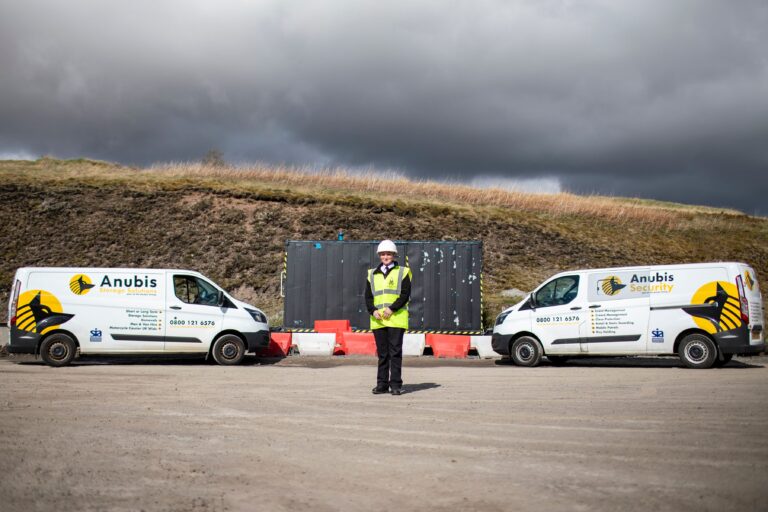
Every business faces security threats—whether it’s an unsecured entry point, valuable assets left unprotected overnight, or gaps in monitoring coverage. Manned security guarding addresses these risks through trained, licensed personnel who provide a physical presence that technology alone cannot replicate. This guide explains what manned guarding involves, what to expect from professional services, and how to determine if it’s the right fit for your premises.
Key Takeaways
- Manned security guarding involves deploying trained, SIA-licensed guards to protect people, property, and assets through active on-site presence, combining visible deterrence with rapid incident response
- UK manned guarding is regulated under the Private Security Industry Act 2001, requiring guards to hold Security Industry Authority licences and undergo enhanced vetting to BS 7858:2019 standards
- Professional services begin with a site survey and risk assessment, producing tailored assignment instructions that integrate with existing surveillance systems like CCTV cameras and alarms
- Manned guarding is highly adaptable—suitable for commercial offices, construction sites, retail centres, and logistics hubs—with options ranging from 24/7 coverage to out-of-hours protection
- Choosing an accredited provider with BS 10800 and BS 7499 compliance ensures consistent guard performance, regulatory compliance, and alignment with insurance requirements

What Is Manned Security Guarding?
Manned security guarding involves placing experienced security officers on-site to protect buildings, people, and physical assets through active presence and intervention. Unlike passive electronic measures such as CCTV cameras or alarms, manned security guards provide proactive surveillance, immediate response, and human judgement that technology cannot match.
Guards combine several protective functions:
- Visual deterrent presence that discourages potential criminals from targeting the premises
- Routine patrols checking perimeters, doors, windows, and restricted areas
- Access control at gates, receptions, and entry points to prevent unauthorised access
- Incident response including de-escalation and liaison with emergency services
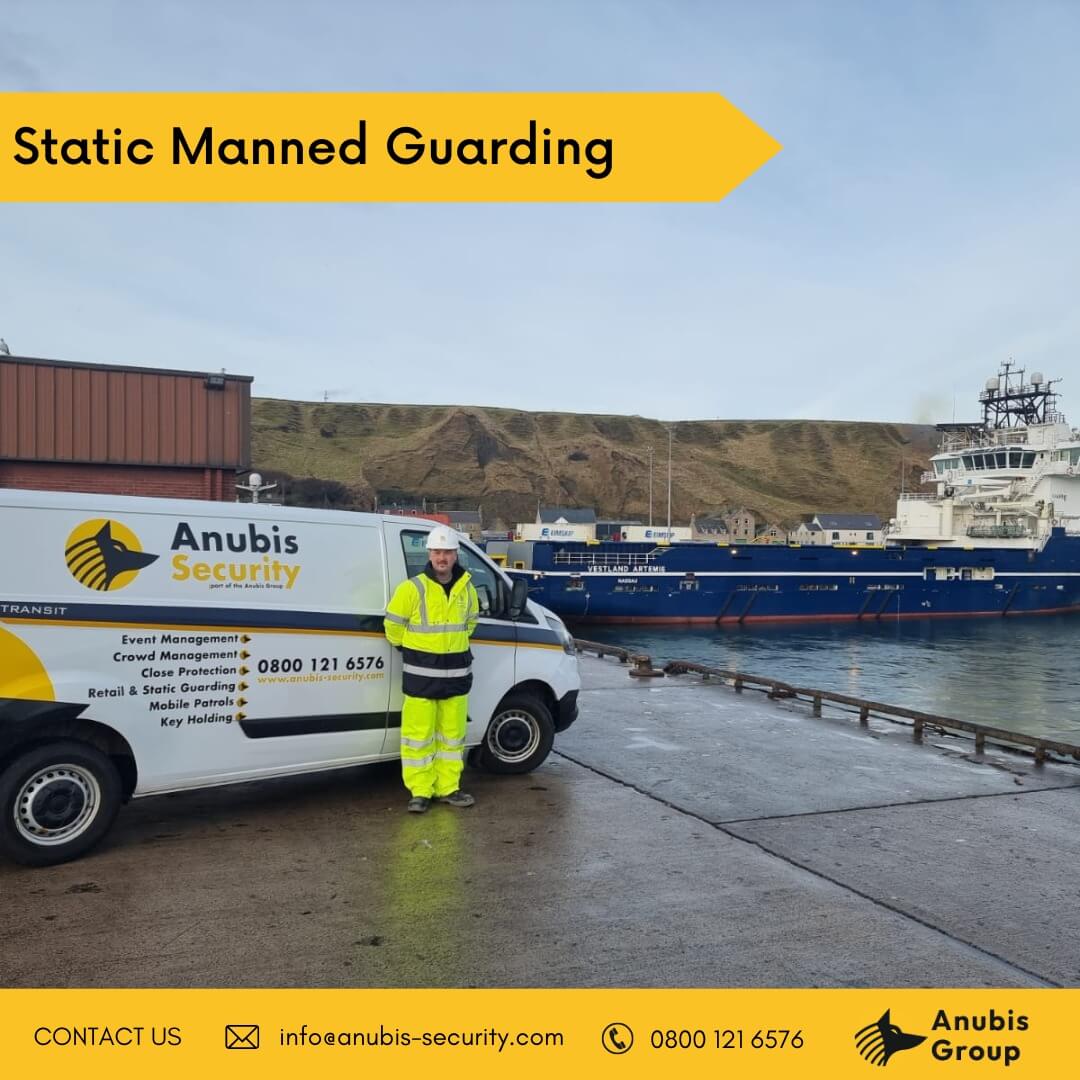
Manned guarding can be static (guards stationed at a gatehouse or reception), mobile (roving patrols around a perimeter), or a blend of both. This guarding service is typically deployed on commercial premises, industrial estates, logistics warehouses, retail centres, events, and construction sites where unattended systems alone cannot adequately address security threats.
What to Expect from a Professional Manned Guarding Service
When engaging manned guarding services, UK businesses typically follow a structured process designed to create site-specific protection.
Initial engagement steps:
| Stage | What Happens |
|---|---|
| Risk assessment | Provider evaluates vulnerabilities, access points, and threat profile |
| Site survey | Physical inspection to understand layout, patrol routes, and integration needs |
| Assignment instructions | Documented duties, escalation procedures, and communication protocols |
| Deployment | Guards mobilised with site-specific briefing |
Day-to-day, security personnel perform duties such as signing visitors in and out, monitoring CCTV feeds, conducting perimeter checks, and providing a reassuring presence for staff and customers.
Guards communicate with control rooms via radio and digital reporting apps, logging incidents and patrols in real time. This creates an auditable trail valuable for insurers and compliance requirements.
Operational flexibility is standard: options include 24/7 coverage, out-of-hours only guarding, temporary cover during heightened risk periods, or long-term embedded security teams deployed at short notice when circumstances change.
Core Duties and Responsibilities of Manned Security Guards
Although each site is unique, highly trained security guards share common responsibilities defined by assignment instructions and UK regulations.
Access control duties:
- Checking ID and verifying contractor credentials
- Issuing visitor passes and logging vehicle movements
- Managing entry and exit at gates or barriers to ensure only authorised individuals access the premises
Patrol and monitoring:
- Regular internal and external patrols to deter intruders
- Checking doors, windows, and equipment for signs of forced entry
- Identifying hazards such as leaks, fire risks, or unsafe behaviour
- Integration with surveillance systems to actively monitor feeds
Incident response:
- Responding to alarms and investigating suspicious activity
- De-escalating disturbances and taking appropriate action
- Preserving evidence and liaising with emergency services
- Documenting security incidents for client reporting
Supporting responsibilities:
- Providing directions to visitors
- Welfare checks for lone workers
- Supporting fire evacuations and roll calls
- Front-of-house assistance where security and reception duties combine

Qualifications, Licensing, and Standards for Manned Security in the UK
Any officer carrying out licensable manned guarding duties in the UK must hold a valid front-line Security Industry Authority licence. This regulation ensures guards meet minimum competency and vetting standards.
SIA licence requirements:
- Completing recognised training covering conflict management, legal responsibilities, and physical intervention where relevant
- Passing identity verification checks
- Undergoing enhanced DBS background screening
- Personnel screening to BS 7858:2019 standards
The Private Security Industry Act 2001 governs the industry, while British Standards provide operational frameworks:
- BS 10800:2020 covers organisational requirements for security service provision
- BS 7499:2020 addresses static site guarding and mobile patrol services
Reputable providers invest in ongoing professional development, refresher training, and site-specific inductions. Many clients look for additional accreditations including NSI or SSAIB approvals, ISO 9001 for quality management, and SafeContractor certification for health and safety assurance.
Why Manned Guarding Has Become Increasingly Important
The rising importance of manned security connects directly to broader UK crime trends and evolving business risks.
ONS data shows England and Wales recording sustained burglary levels around 250,000-300,000 offences annually into 2024, with criminal damage, vandalism, and violence driving business security investment. These figures explain why organisations increasingly deploy guards as part of comprehensive protection strategies.
Key factors driving demand:
- Sites have become more complex with 24-hour operations and high-value equipment
- Mixed-use spaces require human judgement to manage diverse risks
- Purely remote or automated security approaches miss subtle warning signs
- Insurers and corporate risk managers expect visible, professional guarding for high-value locations
- Staff and customers feel safer with trained security personnel on-site, improving morale during late shifts
Key Benefits of Manned Security Guarding
Manned guarding offers overlapping benefits spanning deterrence, response, compliance, and customer service. Understanding these key benefits helps organisations evaluate whether this investment aligns with their risk profile.
Visible Deterrent and Crime Prevention
A clearly identifiable security presence significantly reduces opportunistic offences. Uniformed guards, high-visibility vests, and marked guard posts make potential threats think twice.
- Offenders typically avoid visibly guarded, well-lit premises
- Regular, unpredictable patrol patterns increase perceived detection risk
- Body-worn cameras and incident logs create evidence trails
- Retail parks, depots, and construction sites see measurable reductions in theft and criminal activity
This powerful deterrent effect addresses break ins, trespass, vandalism, and even arson attack risk before incidents occur.
Rapid Incident and Emergency Response
On-site guards respond immediately to triggered alarms, suspicious activity, or requests for assistance. This rapid response capability delivers real advantages over remote monitoring alone.
Response scenario example: A guard discovers an attempted break-in during a night patrol. They secure the area, preserve evidence, contact police, and notify the client—all within minutes. This limits potential damage and supports faster return to normal operations.
Guards trained in basic first aid, fire safety, and evacuation procedures can respond quickly to medical incidents or fire alarms before blue-light services arrive, providing critical early intervention that protects people and assets.
Enhanced Monitoring, Access Control, and Compliance
Manned guarding integrates with existing CCTV cameras, intruder alarms, and access control systems. Guards monitor live feeds, acknowledge alarms, and physically verify areas of concern—reducing false alarm callouts.
Compliance support includes:
- Checking contractor permits-to-work
- Enforcing PPE requirements at industrial sites
- Managing visitor sign-in procedures
- Creating audit trails for health and safety investigations and insurance claims
This approach helps organisations demonstrate due diligence while maintaining a secure environment.
Types of Sites and Situations That Use Manned Guarding
Manned guarding adapts to diverse sectors throughout the UK, each presenting distinct risk profiles.
| Site Type | Typical Guard Duties |
|---|---|
| Commercial offices | Reception security, car park monitoring, out-of-hours protection |
| Construction sites | Protecting plant and materials, deterring trespassers, monitoring fuel storage |
| Retail and hospitality | Theft deterrence, crowd management, front-of-house presence |
| Logistics hubs | Gatehouse control, perimeter patrols, delivery verification |
| Critical infrastructure | 24/7 guarding, access enforcement, high risk safeguarding |
The comprehensive range of applications demonstrates how static security guards and mobile patrols can be tailored to virtually any business requirement.
Choosing the Right Manned Guarding Provider
The effectiveness of manned security depends heavily on provider quality, reliability, and management systems—not simply guard numbers.
Selection criteria:
- SIA-approved status and ACS accreditation
- Proof of BS 10800 and BS 7499 compliance
- Strong references from comparable sites
- Robust recruitment, vetting, and training practices
- Digital patrol and incident reporting systems
- Clear supervision and performance monitoring processes
Avoid providers offering generic, one-size-fits-all deployments. The right partner conducts thorough risk assessments and develops tailored security plans addressing your specific vulnerabilities.
Ask about response times for additional cover, escalation procedures, and how security teams integrate with existing electronic security measures. This due diligence helps ensure your guarding security investment delivers genuine peace of mind and protection.
Frequently Asked Questions
How does manned security guarding differ from mobile patrol services?
Manned security guarding provides continuous on-site presence where guards remain stationed throughout their shift. Mobile patrol services involve guards visiting multiple locations on scheduled or random bases, conducting brief checks rather than maintaining constant presence. Many businesses combine both: static security guards at higher-risk areas with mobile patrols covering extended perimeters or lower-risk sites. On-site guarding offers faster response but higher costs, while mobile patrols provide cost-effective coverage across multiple premises.
Is manned security guarding suitable for small businesses?
Manned guarding scales effectively for small offices, retail units, and workshops—not just large corporate sites. Smaller businesses might opt for part-time, evening, or weekend guarding, or temporary cover during stock deliveries, refurbishments, or local crime spikes. An initial risk assessment determines whether full-time guarding, part-time presence, or a blend with technology offers the best fit. Insurers often offer favourable terms when appropriate guarding is in place, relevant for smaller firms with limited resilience to losses.
How many security guards do I need for my site?
Guard numbers depend on site size, access points, operating hours, risk level, and specific obligations like lone worker support. Professional providers complete site surveys and risk assessments before recommending staffing levels. A single-entrance office might need one guard, while a large multi-gate industrial estate requires several. Spreading coverage too thinly reduces effectiveness; over-resourcing wastes budget. The recommendation balances risk, operational needs, and cost.
Can manned security guards perform reception or concierge duties?
Many organisations use dual-role officers combining security with front-of-house tasks: greeting visitors, issuing passes, and answering enquiries. This model works particularly well in office buildings where it provides professional welcome alongside strong security presence. When combining roles, assignment instructions must clearly prioritise security responsibilities during incidents. Guards still require appropriate SIA licensing regardless of customer service activities.
How quickly can a manned guarding service be set up?
Many UK providers can mobilise standard guarding cover within days for planned deployments, sometimes within hours for urgent requirements. Rapid deployment depends on guard availability, licensing verification, and site familiarisation. Complex or high-risk sites may require additional lead time for detailed risk assessments, specialist training, or security clearances. Early engagement with providers ensures smoother mobilisation and clearer expectations. For further information on deployment timelines, contact providers directly to discuss specific requirements.